
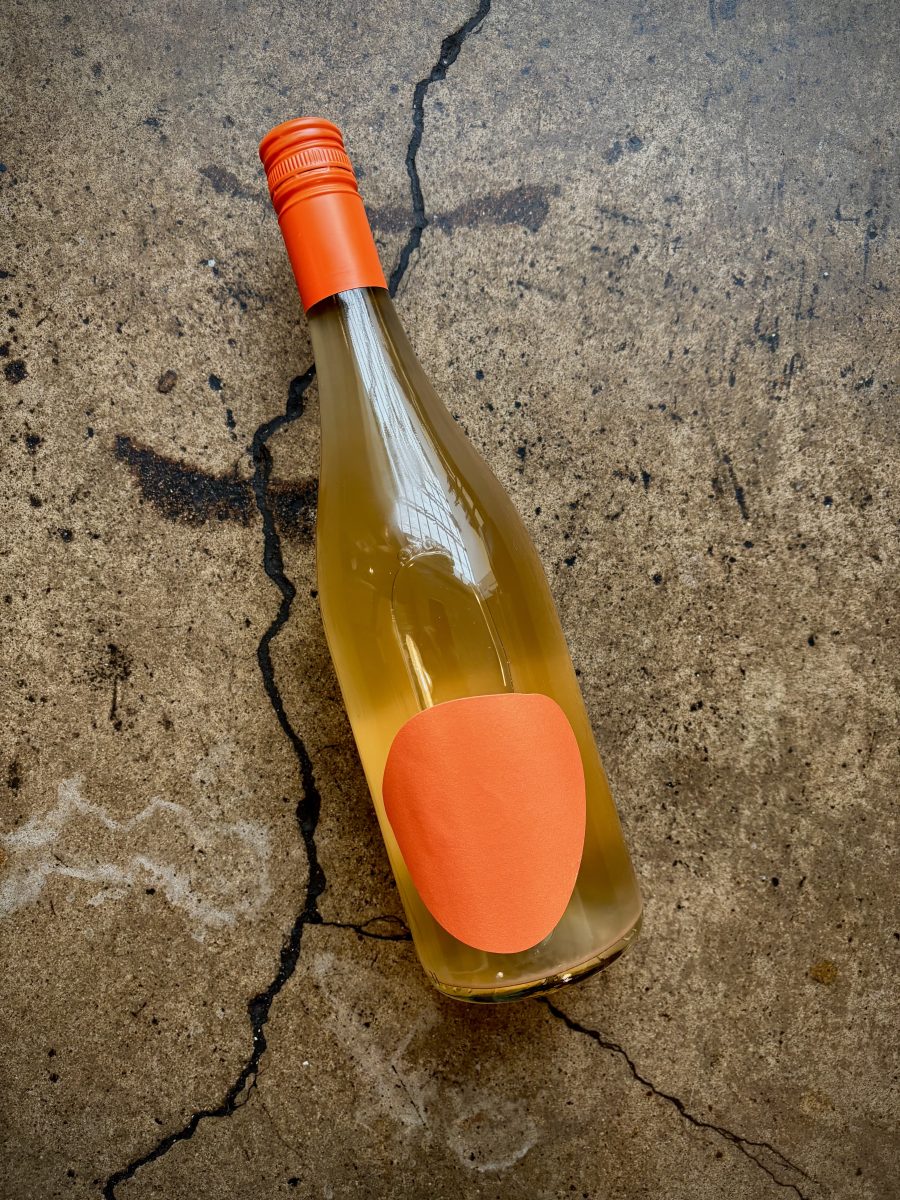
Müller-Ruprecht
Reflecting on the ever-more-common habit of turning away local visitors so winemakers can focus on their international markets, Philipp Wöhrwag of Müller-Ruprecht said:
“That would be horrible for me. It’s one of the great joys to sit with people from the village and to taste wines together.”
He continued: “It’s not at all efficient; but I want to meet the people that drink my wines. I want to be a part of the community.”
It remains one of the more beautiful things I’ve heard a winemaker say – to be a part of the community. It’s not practical or logical, but really: Is there any higher goal for a winery?
But let’s start at the beginning.
In the spring of 2020, hunkered down and unable to travel because of the pandemic, unable to meet new people, unable to taste new wines, I started discussing with Klaus Peter Keller the possibility of doing an offering on the young growers he was most excited about.
If I couldn’t find new things myself, I could at least have one of the most talented winemakers on earth show me some new things? Seemed like not a bad idea?
One of the estates Keller introduced us to was Müller-Ruprecht in the northern Pfalz, in Kallstadt, literally around the corner from another estate you might have heard of – Koehler-Ruprecht. (Yes, the families were related at the level of the great-grandparents.)
Both of the “Ruprecht” estates are doing thoughtful, organic farming (Müller-Ruprecht is certified organic); both estates farm prime parcels of the famous Saumagen. Yet I suppose that’s where the commonalities end.
Where Koehler-Ruprecht can have a rather textural, round and powerful style, Müller-Ruprecht presents the sharper, perhaps more electric side of this vineyard, of this village. I’m a Koehler-Ruprecht fan; this is not a discussion of quality, it is a discussion of style.
Suffice it to say we have been wildly impressed.
On more than one occasion Müller-Ruprecht’s single-vineyard “basic” bottling from the Annaberg has reminded me of Weiser-Künstler’s estate Feinherb, that hallowed lime-zest salt-lick of a Mosel wine. (A few other people, including Joe Beddia of Pizzeria Beddia, have been wildly impressed by the wine, inspiring his label for the bottling, reproduced to the right. And, in full circle, Keller posted on Instagram drinking the “Kabinett Trocken” in good company.)
To shape a wine of such freshness in the Pfalz is… well, extraordinary.
When I could finally get back to Germany, in the late-summer of 2021, I went and paid a visit to Sabine and Philipp, the young couple who have taken over the helm at the family winery. This is a young family with kids running this way and that; it’s a level of energy, smiling, laughing (and yes occasionally crying) that I had forgotten about, my kids being at this point heading toward adolescence.
In an environment like this, you’re immediately a part of the family. Tasting wines and talking soil types while you pickup the baby’s sippy cup from the floor while keeping the other kid from chewing on your Zalto. It’s really a beautiful thing, this strange capacity for humans to connect across continents and cultures.
The wines in a way seem to contain this family energy, this kinetic, joyous movement, like atomic particles all flying around with big grins on their faces.
Do not overlook the simple, natural joys from this estate.
Here are wines that have a juicy immediacy, a vibrant zingy-ness that reads as what it actually is: just a cool-climate growing happy grapes, and from these happy grapes, happy wines.
Happiness seems to be something of a meta-theme here.
All the wines are made of 100% estate fruit, harvested by hand. The estate gave up using pesticides/herbicides in 2006 and instead fights weeds mechanically. Since 2020 they are in the process of becoming certified Organic to hand over their vineyards in best conditions to their sons.
Huxelrebe, Gewürztraminer and Chardonnay with 10 days contact with the skins, aged in large used wooden barrel. No Filtration or fining—it is intentially cloudy with yeast which gives a little texture to the very low alcohol wines (just 10.5%!).
-vom Boden